Showing posts with label Devon Sites and Wildlife. Show all posts

Friday, 9 June 2023

All at Sea - Bob's French Third Rates of Renown & Jack's British Third Rates of Renown


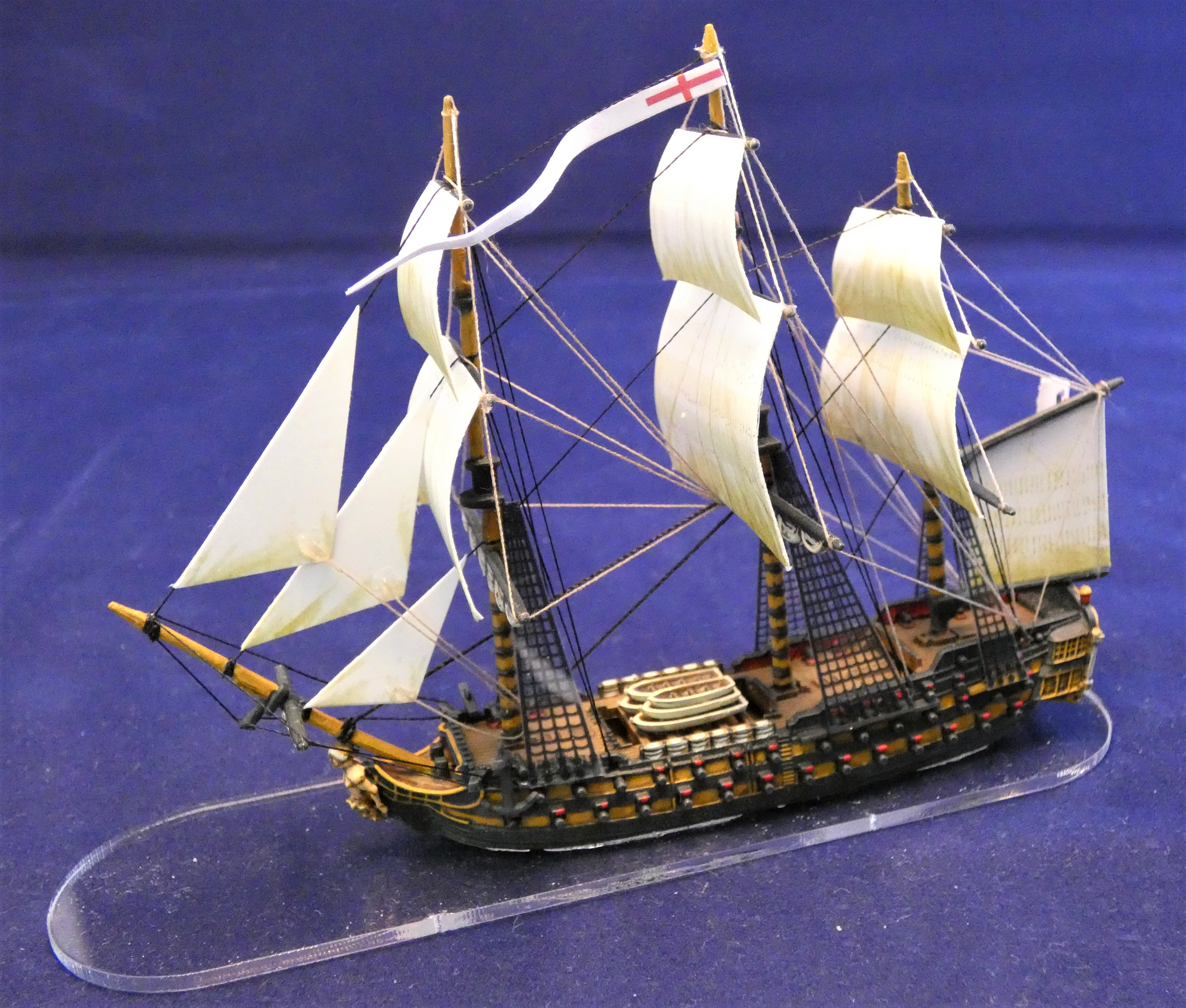
The naval arms race within the Devon Wargames Group continues apace as both Bob's French and Jack's British fleets are joined by three third rates of renown that floated out of the riggers yards this week, whilst the dockyard is geared up for several new projects to fill some gaps in my own line-ups as I get to grips with some of Warlord Games' newer creations that were purchased at the end of 2022; together with a dive into the dark arts of 3D printing and what it has to offer courtesy of my mate Jason, the Welsh Wargamer in Devon, see list of linked blogs in the right hand column, who kindly printed some new additions for some planned future games.

It was back in January 2022 that I set out to build collections for Bob and Jack, and if you haven't see these models coming together then I've linked the posts covering the build of these two collections below;


With a slight four month pause whilst I was away on my travels, work recommenced on my return in February this year with Bob's British Third-Rates of Renown and Jack's three generic third-rates done in British French and Spanish colours, link below;


Now another batch of six third rates join the respective fleets with Bob's French Third-Rates of Renown and Jack's British ones, seen below.


Formidable 80-guns


Argonaute 74-guns


Indomptable 80-guns


Jack’s collection are also joined by three very famous British third-rates.


Bellerophon 74-guns


Revenge 74-guns


Tonnant 80-guns


Finally I still have the Spanish box set to complete for Jack, but have decided to work on that in between a few models needed to complete my own collection and to provide a bit of novelty in my work with some of the more recent models released by Warlord, most of which I purchased just before I went away last year.

So below from left to right we have three of the 50-gun 4th-rate models, two of which will be British and one to join my Dutch Camperdown fleet.

In the centre front we have the British Ardent Class 64-gun Razee which will become my new HMS Indefatigable and a more suitable model for Sir Edward Pellew to do battle with in several new scenarios I plan to play test.

Behind Indefatigable is the 74-gun razee which will be an interpretation of HMS Majestic that fought as a 74-gun ship at the Battle of the Nile but in 1813 in response to the American super-frigate threat was razeed into a fast sailing 58-gun 4th-rate frigate with a gundeck of 28 x 32-pdrs and an upper-gundeck of 28 x 42-pdr carronades which should be a more than a fair-fight for Cousin Jonathan.

Finally at the back, and with an upcoming Battle of Trafalgar game not far off, I wanted to have ready to include Warlord's new model of Nelson's favourite ship, Agamemnon 64-guns.


On the extreme right and below I also have another model being worked up with my Trafalgar game in mind and brought vividly to life in Carlos Parilla Penegos' painting, namely the Spanish first-rate Santa Anna, seen here ready for priming and with a test-fit of the mast following a bit of work with the mini-drill.


The Santa-Anna was a peculiar first rate and I know the Spanish first-rate I built originally didn't really capture the look of this particular ship, but this new model will look much better and I am really looking forward to the build and paint.

The Warlord Santa Anna kit takes shape prior to getting her prime and paint job.

The three illustrations below capture the look of my razees and Agamemnon and provide much inspiration for these three important British ships to be added to the collection.

HMS Indefatigable, Sir Edward Pellew's famous ship - Derek Gardner

HMS Agamemnon 64-guns, Nelson's favourite - Geoff Hunt

A model of the 74-gun razee, Majestic 56-guns, with her formidable array of 32-pdr long guns and 42-pdr carronades.

The Agamemnon was a very easy build and with her plastic mast set will look fab when painted and rigged.

Equally the two razees will look great when finished with their plastic masts but require a bit more work constructing with obtrusive gaps, particularly around the metal bows that do need filling.

Close up of the razees and Agamemnon at the back

The HMS Romney and Dutch ship Delft provide the inspiration to get working on my three 4th-rates, which make an important addition to the Warlord's Black Seas range of models and fills a gap for another group of scenarios and my planned Camperdown game.

H.M.S. Romney 50-guns, capturing the French 44-gun Sybille and three merchantmen in the roads off Mykonos, Greece, 17th June, 1794


The Dutch 56-gun 4th-rate Delft, seen here battling away with HMS Monmouth will feature as one of my models

These models come with three different figureheads that again need filler to finish them off but are altogether very nice kits which will be complete with the plastic mast and card sail set from the plastic generic frigate.


Finally I have other gaps in my collection that I have a feeling only 3D printing is likely to be able to fill and so last week I met up with my pal Jason who kindly printed out some gunboats and other assorted small craft, plus some Danish, Copenhagen style floating gun-batteries whilst also introducing me to his printer and the dark arts of making these models.

The Gunboat War is a conflict I'm interested in playing with Danish gunboats attacking becalmed British escorts and their merchantmen in the approaches to the Baltic.

Likewise I reckon Nelson's other major battle success alongside the Nile and Trafalgar is Copenhagen which requires some careful thought to bring to the table successfully and the batteries below are part of that plan.


So without an end of year review to oversee the planning and work this year, I had to do a bit of preparation to structure my work for this year on the flight back from down-under this February, and there is quite a bit of stuff that I intend to get on with before now and the end of this year, with a bit of a hint here as to what you might see in future months here on JJ's as the fun continues.

Postscript.
Carolyn and I spent a very enjoyable evening out having dinner with a friend, down from London, the other evening and on our walk home happened to look up and see this chap looking down from above.


A Tawney Owl is quite a rare bird to see in the wild, being a nocturnal creature, and, despite hearing them often at night, have never seen one until now, with the summer evenings being longer and more daylight to be able to catch a glimpse of this beautiful creature.

With all the exotic birds pictured here on the blog on our recent trip down under it's nice to have the 'home-team' represented with such an unusual spot.


As I usually say - more anon

JJ

Wednesday, 5 October 2022

Lustleigh Cleave & Hunters Tor Iron Age Fort - More Dartmoor Adventures in an Ancient Landscape


With the weather getting noticeably cooler as we moved into autumn, Carolyn and I were keen to get back out on Dartmoor before it got less inviting for walkers, this following our little expedition to Natsworthy & Grimspound back in August - link below.

JJ's Wargames - Natsworthy & Grimspound

On that occasion I picked a walk from 'Easy Walks on Dartmoor' by Paul White and published by Bossiney Books, but this time I turned to another of this series of books, 'Short (ish) Walks on Dartmoor, detailing fifteen different walks ranging from 6-8km or 4-5 miles in real distance, with the one we chose, Lustleigh Cleave, walk seven.


As on the previous walk I planned in the route on my phone and iPad using the Footpath app and you can see the route detailed below on the Ordnance Survey 1:25000 walkers map, showing the area of Lustleigh Cleave, next to the village of Lustleigh, just north-west of Bovey Tracey on the eastern edge of the moor close to Hound Tor.


Lustleigh Cleave is described in the book as the most demanding of the walks included with strenuous gradients, above a wooded valley with rocky outcrops and to be prepared for mud!

The contours on the map give a good idea of what to expect and Footpath allows the plan to include the usual waypoints along the route that also coincide with the description in the book allowing me to layout our photos from the day in the sequence we progressed along the route, to better give you an idea of the terrain and the glorious Devon countryside we were progressing through.


On finding our way into the sleepy little village of Lustleigh, we parked the car close to the church and village shop next to a narrow lane that leads to an old orchard that was gifted to the Parish Council in 1966, by Mr & Mrs W. G. Bennett; and the trees, a mixture of cookers and eaters, were absolutely festooned with apples when we walked through with a sign close by inviting villagers to a communal picking the following weekend.


The orchard is the start and end point for the walk that provides access to several foot paths that lead upwards out of the village, through woodland, to crest the ridge that looks out over the valley, or cleave, towards Hounds Tor beyond, with a loop back thorough the lower valley woodland via Foxworthy Bridge at the far end returning via Pethybridge before coming back into the village via the orchard.


The orchard is also home to a fantastic natural monument, a large granite rock, with a throne upon it on which are recorded all the names of the annual May Queens for the village from 1968 to 2019, but with space running out it looks like they'll need to find another rock soon.


The footpaths are well signed but are definitely showing a lot of wear and tear, that makes deciphering them bit of a challenge, so the prepared map of our route provided a good confirmation that we were on the right track.


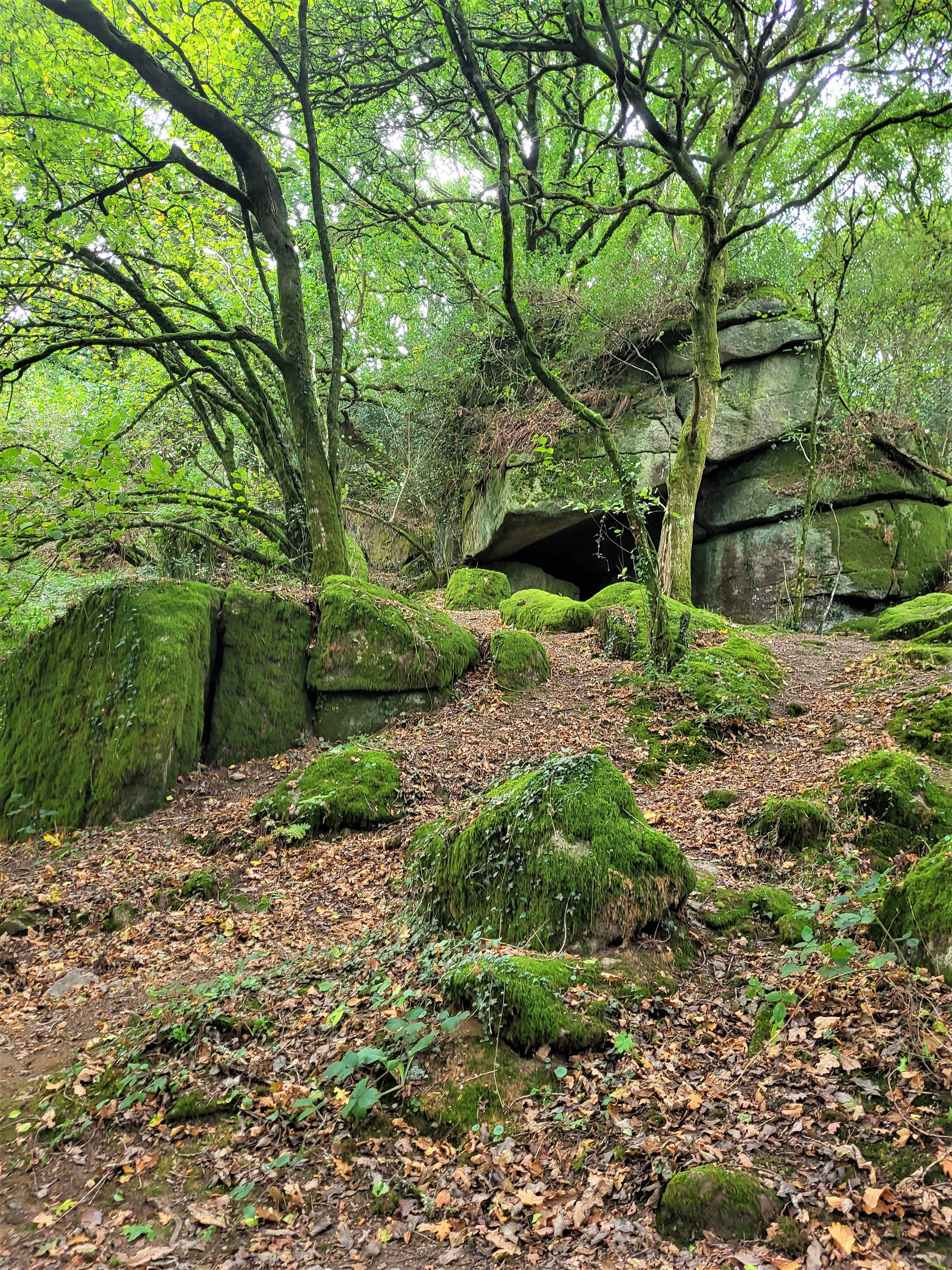
We were soon into thick woodland following the old original Devon lanes that were the original thoroughfares for this part of the world before the invention of the combustion engine, and the pictures reveal how much more difficult our route would have been after a few days of heavy rain, which was not the situation for our walk.


The gradient became gradually steeper as we neared the top of the ridge, to gradually flatten out with the open woodland giving way to large granite blocks and boulders that are the mark of upland Devon with the two large open moorlands of Dartmoor and Exmoor that form the bulk of the landmass of the county; leftover remnants of Britain's Ice Age when the ice sheet covering the country reached its most southern extent, gouging out the cleaves and valleys and depositing the large boulder formations on the high ground when the ice receded to leave the granite tors, now lined and scarred by the centuries of rain, snow, ice and weathering.


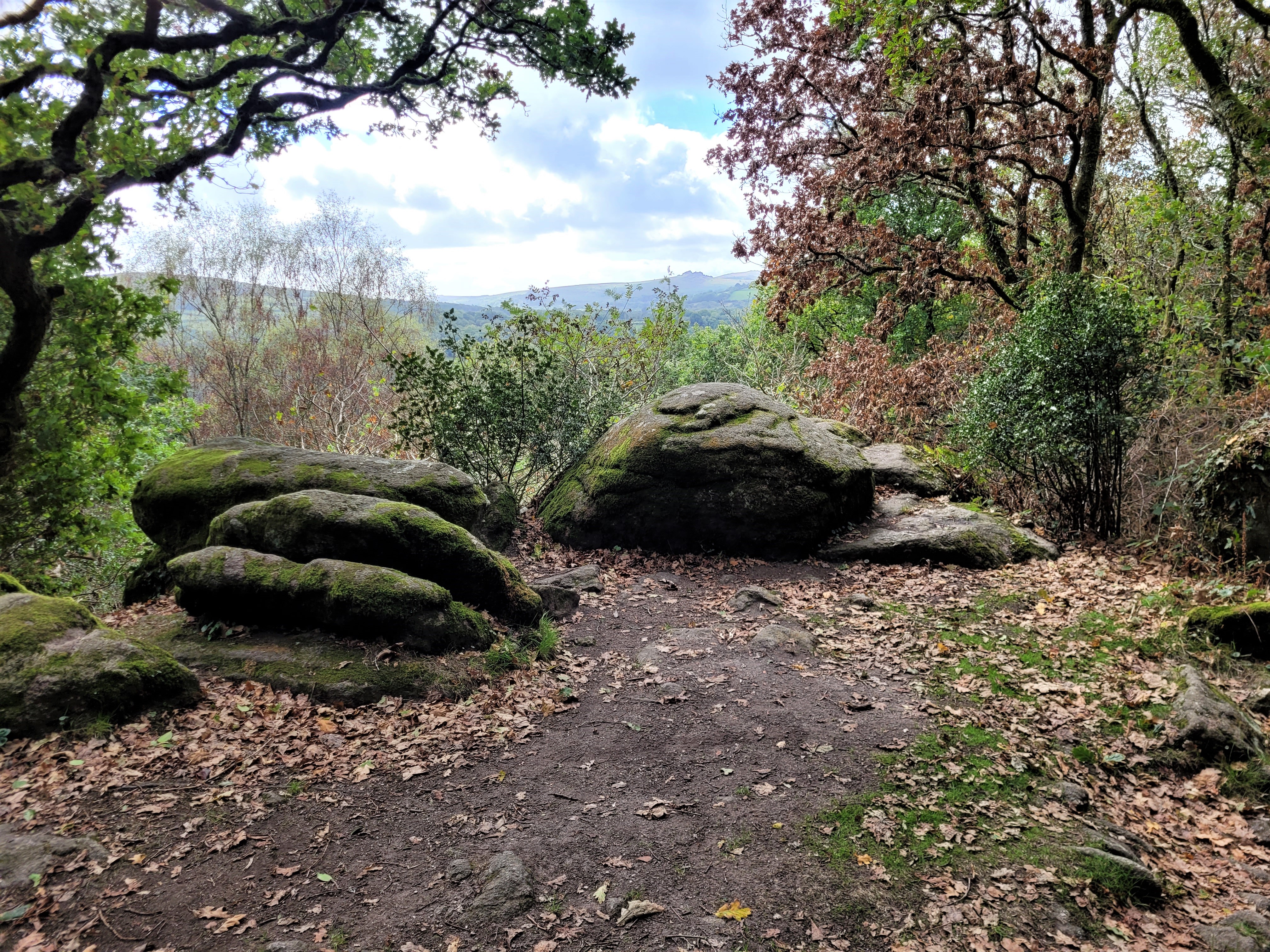
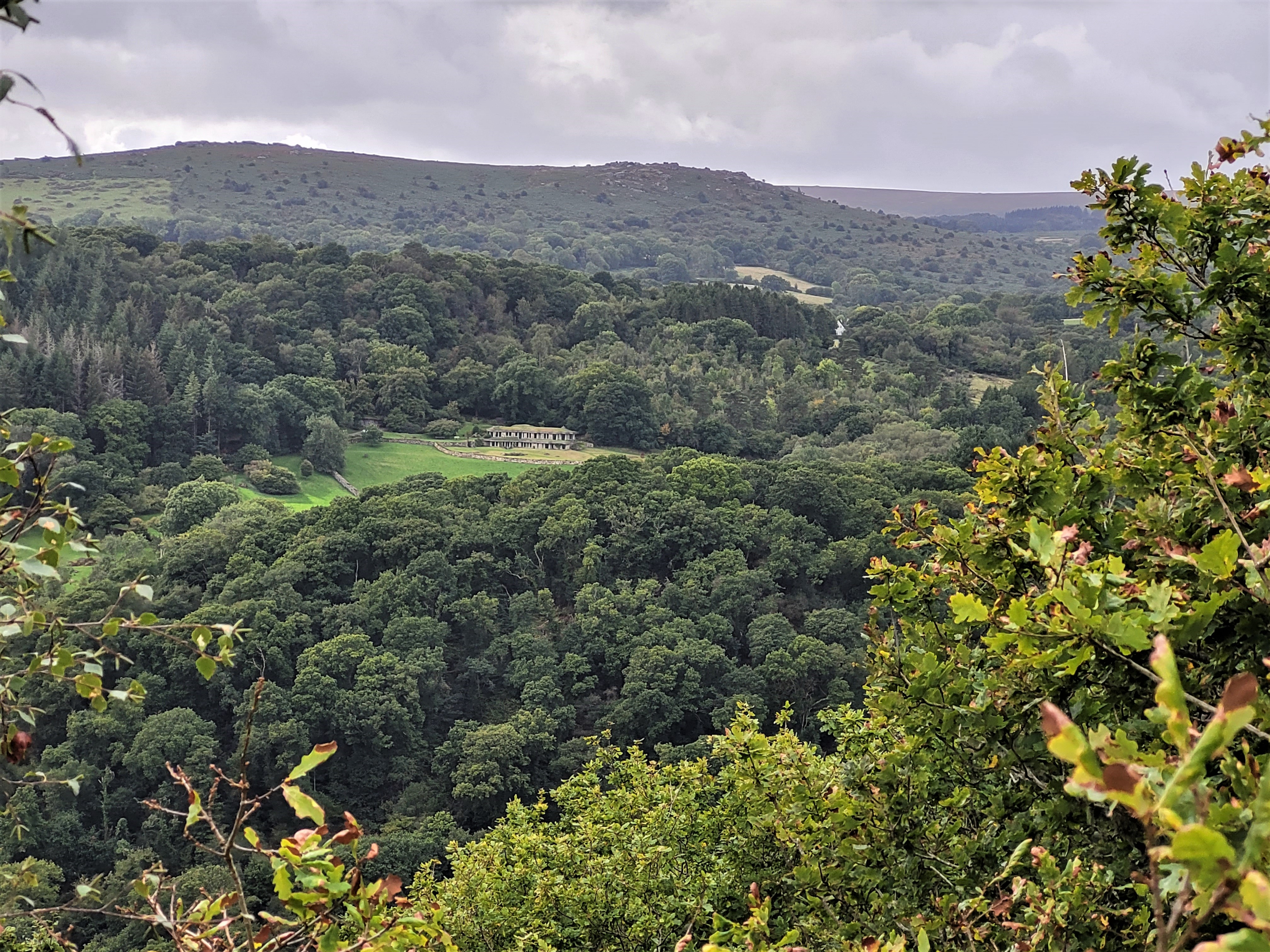
As the trees parted to our front the path turned at the end of the ridge overlooking Lustleigh Cleave below covered in a thick tree canopy with the open moor beyond and the distant rocks of Hound Tor, our first checkpoint at Sharpitor, Nut Crackers or Logan Stone and a perfect place to stop for lunch whilst admiring the view.


I have recently acquired a new camera with improved telephoto capability that I'm still learning to master, and so the opportunity to zoom out to Hound Tor was a good excuse to play with the thing over lunch, and the view above and below gives an idea of its capability, with the rock stacks well picked out in the midday haze.


A bit further along the ridge, the rocks of Sharpitor, jut out over the drop below and I gingerly advanced to the edge to get some wider angle shots of the view up and down the valley, surrounded by heavily moss clad trees and rocks that reminded me of Frodo Baggins in the Hobbit movie, climbing to the top of the tree canopy in Murkwood, to get his bearings towards the Lonely Mountain.


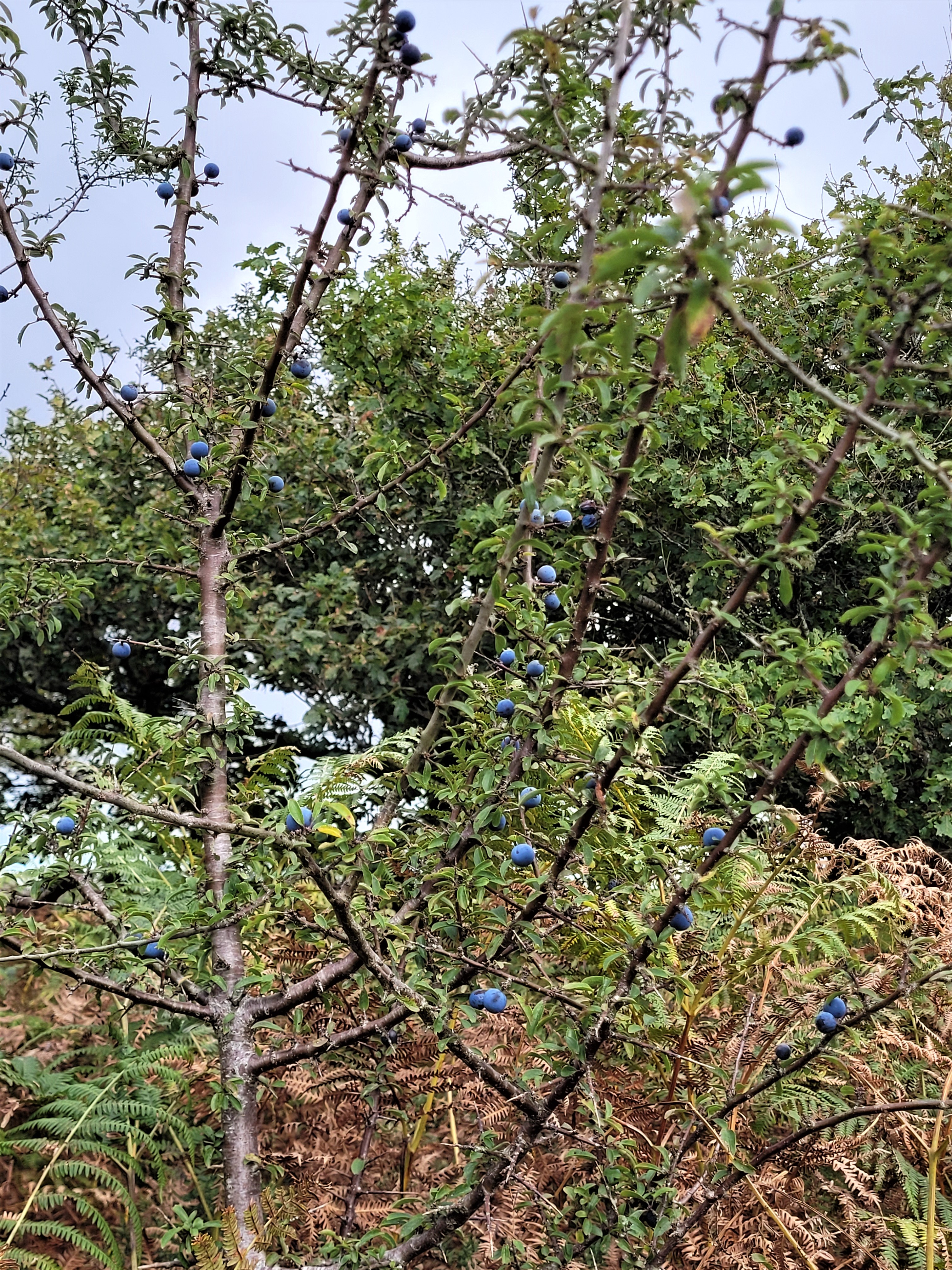
As we turned to follow the path further along the ridge, the treeline finally gave way to more open moorland and our path was lined with sloe bushes, like the apple orchard festooned with fruit, showing what a fantastic summer we have had this year.


Back in the day, Carolyn and I used to take the boys sloe picking in September, with these bitter little fruits forming the basis of my annual sloe gin brewing, with each year's crop of slowly pinking red gin, as the sloes released their distinctive flavour, sweetened with sugar, replacing the bottles of the previous year as each Christmas and following year we spent drinking the production line, adults only of course.


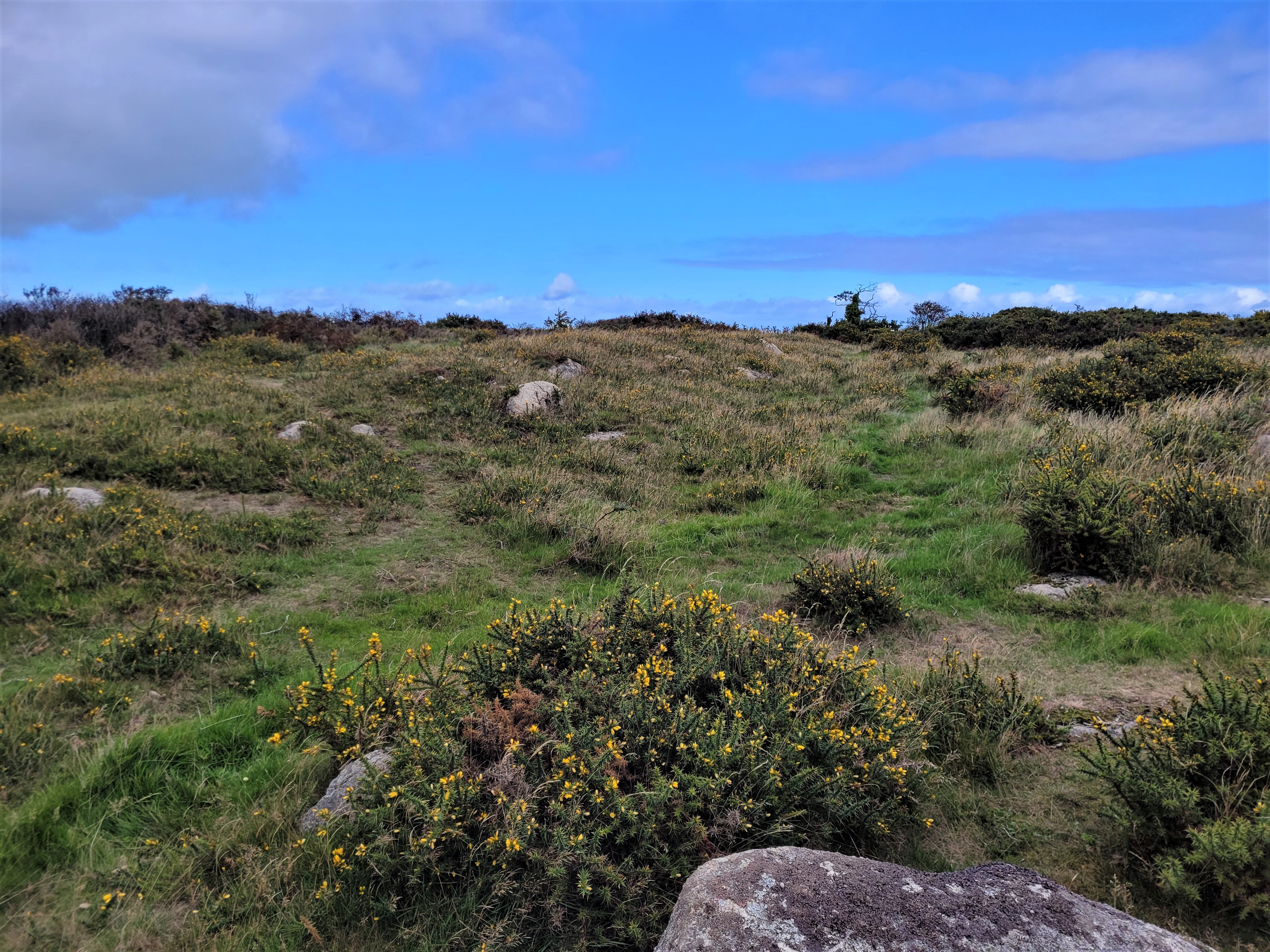
Leaving the sloe bushes, the path gave way to open moorland on the top of the ridge and soon a very slight but noticeable bump in the ground, that on inspection followed a circular pattern, that revealed the well worn remains of the earth embankment and ditch of the Iron Age, Hunters Tor Fort and check point two.


The remains of the Iron Age fort at Hunters Tor


A little further on down the path beyond the fort the skies became a little more foreboding and the hoods went on as a light drizzle started up as we approached Hunters Tor, itself jutting out over the valley below and marking where we had to turn slightly and begin our descent to Peck Farm, before bearing left along the lanes leading to Foxworthy Bridge.


The descent past Peck's Farm led over fields before finding the lane to Foxworthy Bridge again with plenty of signs along the route if a little bit hard to read.


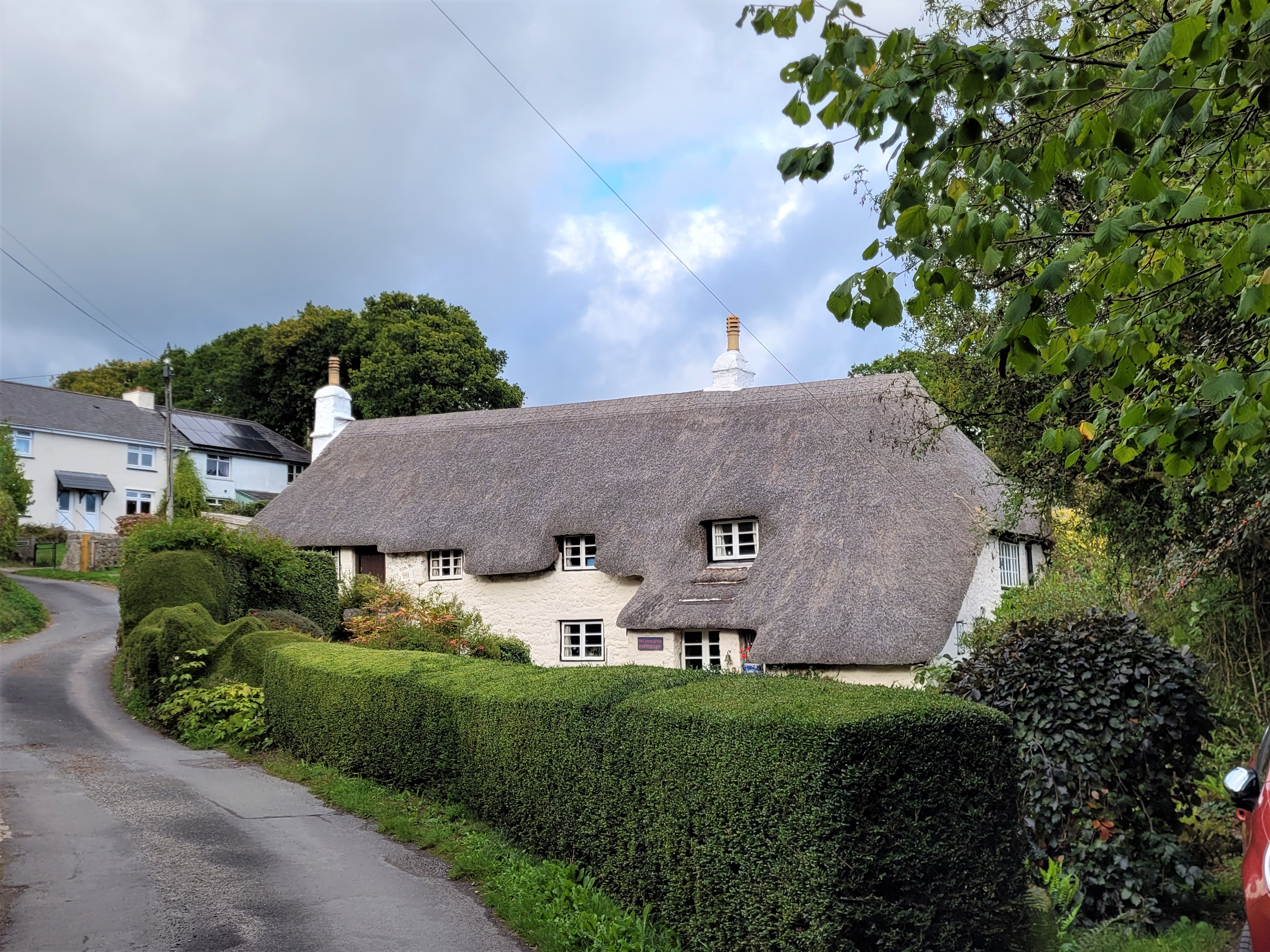
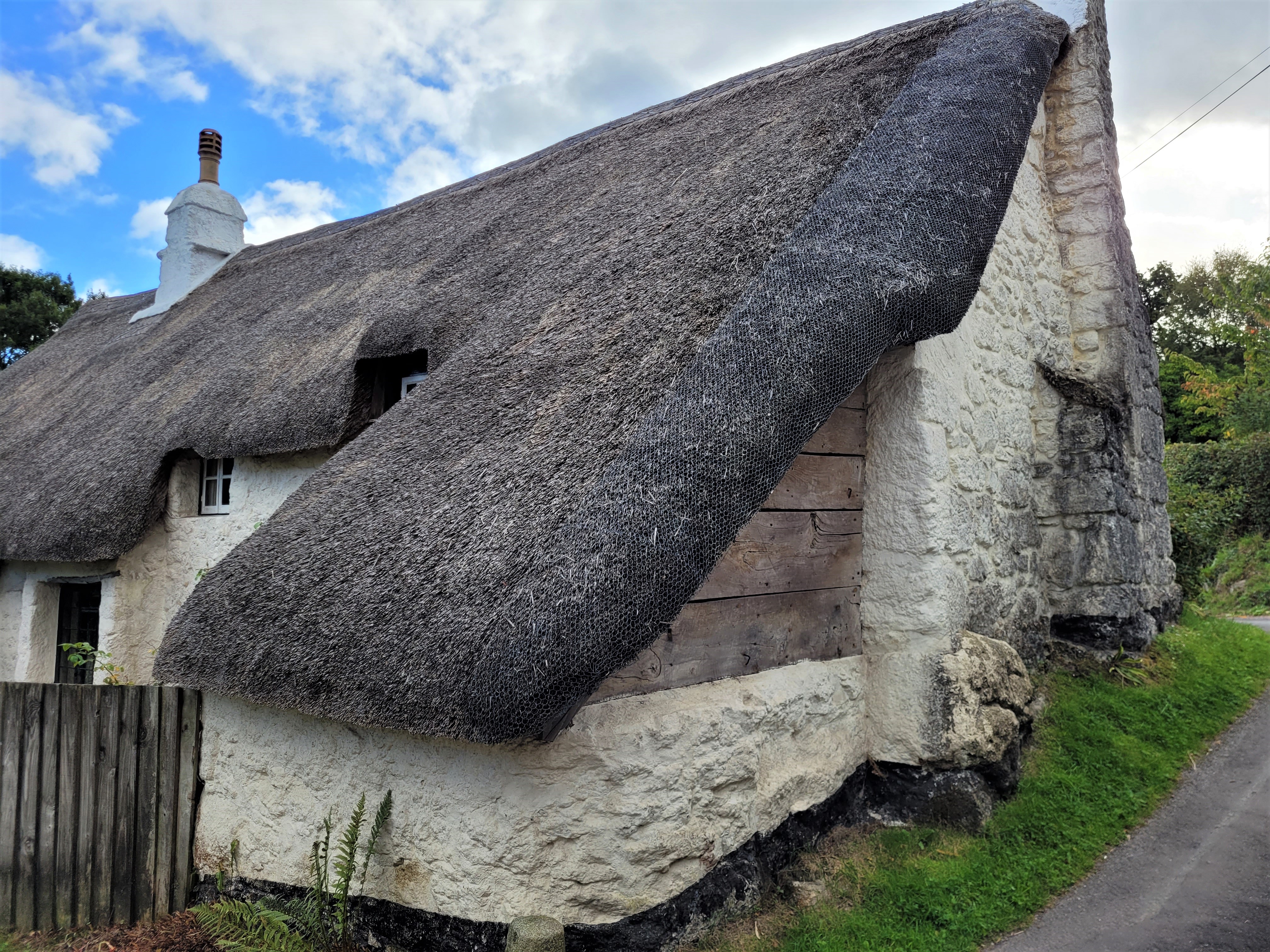
The Devon Long House at Foxworthy Bridge, checkpoint three, was another Chocolate Box lid picture sat alongside the Dartmoor brook that flows along the cleave, with crystal clear water often home to the odd brown trout swimming against the stream.


All the streams and brooks on the moor are crystal clear and freezing cold!

Our sign points towards our path back along the cleave to Lustleigh

The path back through the lower woodland was a delight and very quiet with the obvious signs of autumn and even the birdlife that would normally be quite noticeable and noisy at other times of the year resigned to a quieter energy saving time as winter approaches.


The path of the woods was covered with autumnal leaf litter and the occasional pile of pony dung, which explained the preponderance of black glossy Dor Beetles or Dung Beetles that are very active in woodland between April to October, where they will dig their burrows under dung piles, feasting on the dung, leaf litter and woodland fungi.


Geotrupes stercorarius or the Dor beetle. We were conscious to watch where we were walking to avoid crunching these hardworking little beetles going about their business cleaning up the woodland floor

Soon our path brought us to checkpoint four and the lower part of the rocky outcrop above, of Sharpitor and Logan Stone.


Oh and talking of woodland fungi, this time of year is perfect for foragers that know what they're looking at and what to eat and what to stay well clear of.


Eventually the path took a distinct turn left and up as the track gave way to a more defined lane leading to Pethybridge.


Another Chocolate Box scene was checkpoint five at Pethybridge with another fine example of a Devon Longhouse and nearby smaller cottages, and the path giving way to a metaled surface as we got nearer to Lustleigh.


The climb up from Pethybridge was the last significant gradient along the walk and was well worth the effort to get the view that greeted as as we crested the end of the ridge overlooking Lustleigh village, looking absolutely gorgeous below in the late afternoon.


A few village footpaths later we were back in the orchard where our little adventure began some three and half hours previously and both Carolyn and I were looking forward to a drink and a well earned fish supper.


Another Dartmoor Walking Season comes to an end and I look forward to writing about more adventures into its ancient landscape in 2023.