Sunday, 19 November 2017

Warfare 2017


I don't suppose I am alone among the wargame community in having favourite shows that I attend become like landmarks through the year and indeed years as one starts to look back at shows remembered from past times when chatting with friends having similar memories.

I have been coming to Warfare now, on and off for too many years that I care to remember and have reported on a couple of them here on the blog.

Warfare 2016
Warfare 2014

Each time is an opportunity to take a moment to reflect on the hobby with friends, get inspiration for ongoing and new projects and just enjoy a day spending time in the company of like souls passionate about a great hobby.

The traders hall seemed not as busy as last year, and as a punter made the 'retail experience' a much more pleasurable one with time to browse and see what was new without being elbow to elbow with fellow shoppers.

This year, following last year's difficulties getting parked before the show, Steve Vince and I set out from Exeter good and early which saw us arrive a good fifteen minutes before doors open and thus we managed to get parked and into the traders hall right from the start.

I had ordered up a Roman Fort from Martin at Warbases which will be part of the Roman-Dacian project next year and will form a nice back-drop to one of my planned games which will see battle before the walls of Sarmizegetusa.

https://warbases.co.uk/?product=roman-city-gate-and-walls


In addition to the Roman stuff I am in the middle of getting my Dux Bellorum Saxon/Viking collections done and with the Viking Hirdmen on the painting desk as I write, I picked up the LBM shield decals for them and my remaining Dark Age Warrior box, plus this very nice Viking banner man complete with banner from Gripping Beast


https://www.grippingbeast.co.uk/SWBB03_Viking_Warbanner_Bearer--product--5202.html

Moving swiftly on whilst the hall was relatively open and easy to get around I worked my way over to the Perry Miniatures stand and also picked up a box of plastic Continental Infantry as part of my contribution to getting some figures put together for this year's Devon Wargames Group Xmas big game, now re-named the Gus Murchie Memorial Game in memory of a great friend and fellow club member no longer with us.


I will have to get these ready for a Muskets & Tomahawk game but plan to incorporate these into a future new Maurice collection for the AWI in 28mm.

So with all the purchases done and dusted the remaining part of the day was freed up to go and chat with friends at the show and to wonder around the display games so as to give you an impression of the day here on the blog.

The display game hall seemed as busy as in previous years but lacked a little in terms of the games that had been seen before
You will know my normal routine is to give you a very personalised perspective of the shows I visit and the games that grab my attention.

This means that I tend to linger around tables that fascinate my eye as a modeller, appealing to the aestheticist in me or a game that has my interest from an 'historical' or 'rules being used' perspective where the look of the game used to display that particular action or set or rules really interests me.

So what follows is the collection of games that ticked those boxes at yesterday's show.

Gettysburg, Lee's Right Hook, ACW 28mm - Earlswood Wargames Club

The first game pictured here should need no explanation as to why I spent the time lingering and finding new views to hold in the viewfinder.

This particular game stood out heads above for me as an example of a great display game with attention to detail, lovely terrain and a feast for the eye.

As you will know the American Civil War has never really 'floated my boat' but that took nothing away from the pleasure I had in photographing this game and the Earlswood chaps are to be congratulated for adding much to my day and I suspect a few others with this lovely table.


Battle of Stoke Field 1487 - Newbury & Reading Wargames Society

This particular game grabbed my attention because I was stood on the edge of this very battlefield with Mr Steve earlier this year on our visit to Wargames Foundry and Partizan with the battlefield being situated right next door to the Foundry shop and premises.

Battle of Stoke Field
Wargames Foundry & Battlefield of Stoke Field

The weather on the day which saw the rain coming down in stair-rods prohibited any serious exploration but it is on the list of planned places to see next year.

Arguably the last battle and spluttering end to the viscous Wars of the Roses, the armies and key positions were nicely captured in this 28mm display game.


Battle of Raphia 217 BC - Newbury & Reading Wargames Society 

With my focus very much on my own 28mm ancient collection going into next year, my eye is immediately drawn to ancient games in this scale and the look of the games created, no matter if the period is outside the parameters of my own.

Elephants and massed ranks of pikes is always likely to draw attention and the Newbury and Reading chaps seemed to be deeply engrossed in play when I wondered up to take pictures of their game.


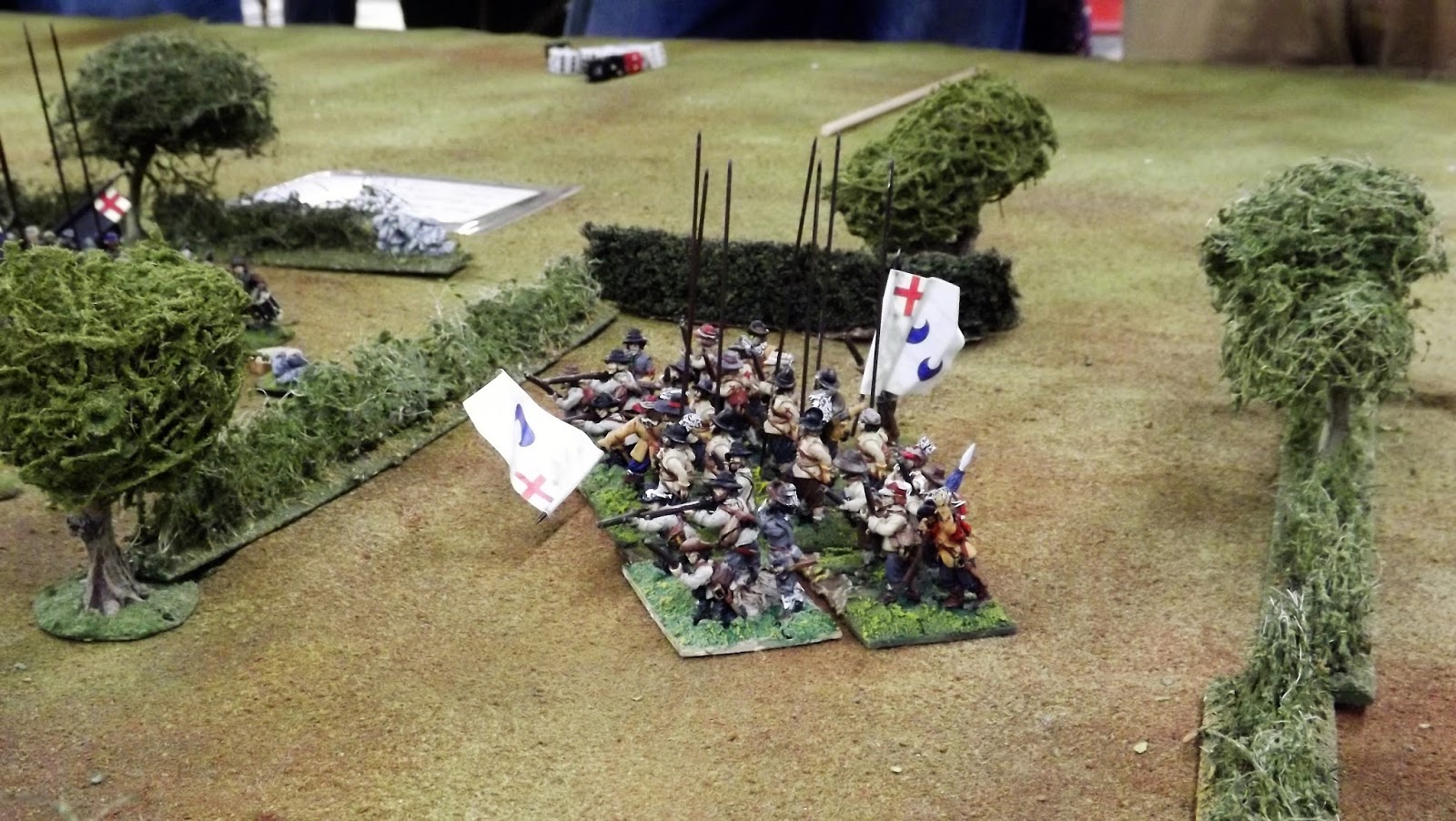
Prince Rupert's Blue-coats, Victory without Quarter - Sealed Knot

I love the English Civil War period and the sight of musket and pike blocks going toe to toe, and so was immediately drawn to the sight of a few chaps from the Sealed Knot Society dressed in appropriate period garb overseeing this very nice collection of 28mm figures doing their stuff.

Occasionally you don't have to spend a fortune on rule-books lavishly filled with wargamers-porn to acquire a really well thought out and entertaining set of rules.

Among examples of this would be 'A Cost of Steel' for playing Wars of the Roses games and in this case 'Victory without Quarter' for the English Civil War.

Victory without Quarter rules.pdf

I was really interested to stop and watch this game being played with my favourite mechanism of random activation, but also to enjoy getting these pictures of the game in play.



Ancients 28mm (Possibly Malvern Old Wargamers) 

With my eye out for ancient collections on show I took a look at this 28mm collection which I assume is the Malvern Old Wargamers, which if mis-attributed, please drop me a comment for a re-edit.

The game had Warlord Romans and Dacians on the table so I was really interested to see how the units were modelled and displayed.


Forager - Stand to Games Ltd

Adrian McWalter and Quinton Dalton were present yesterday displaying their lovely new range of characterful 28mm Peninsular War Napoleonics designed to compliment their new skirmish level rule set 'Forager'

http://www.standtogames.co.uk

The chaps not only had their display game up and running to show how the rules played but also had an additional display to announce a further development with Forager 2 for wars in North America.

Of course Adrian and Quinton are the inspiration behind Over the Hills, Napoleonic rules, a set I am very much involved with at the moment, developing a collection of Peninsular War battle scenarios with my good friend Steve M, so it was really great for Steve and I to chat with the guys about the games we have played to date and ideas around the rules in general.


Aylesbury Wargames Club - Team Yankee

When I were but a lad and the Cold War was very much a reality rather than a period in history I spent quite a few hours playing BAOR Cold War games in 1:300th using Wargames Research Group rules.

I was struck then by the increased potential of massed destruction offered by weaponry rapidly increased in its effectiveness in the post WWII era with lines of massed Soviet armour rapidly turned into a pyre of smouldering steel.

I am afraid the period lost its appeal for me in those early years in the hobby with the realisation that models didn't stay active for very long on a Cold War battle table and the games became a rather sterile affair of who could kill who the quickest, with one campaign game I remember culminating in a nuclear mine being let off on the outskirts of Exeter providing the final full stop to that particular game and I think my interest in the era.

That said, having lived through the Cold War, and enjoying driving a Chieftain Tank over Salisbury Plain for a 40th birthday treat, I am fascinated in the new interest in the period and Battlefront's lead into modelling it in 15mm with all the implied scale distortion that inevitably entails.

That said the figures, models and terrain can be very effective in the look they create and although a period I would not get into, still can draw my eye with fond recollection of games and collections past.


So that's Warfare 2017 and another year in the hobby nearly concluded but with lots of inspiration and thoughts garnered for future games and collections.

Congratulations to the organising committee and members of the Wargames Association of Reading for pulling off another great show, 38th in the history of the show 'Warfare' and with the club celebrating 39 years in the hobby, hitting their 40th anniversary in February 2018.

The Devon Wargames Group are not far behind with our 37th anniversary this year and well aware of the club traditions that an established club creates.

I thoroughly enjoyed the day and spending time with friends and look forward to Warfare in 2018.

Wednesday, 15 November 2017

Mr Steve's Book Review Poll


As regular followers of JJ's Wargames will know, Book Reviews form a big part of the posts on the blog and I am helped with that content by the contributions of Mr Steve who adds to the value of this blog by covering historical reading that would not necessarily fall into my orbit, just as my regular diet of books would not necessarily match his.

Thus we are able to create synergy where the coming together of our joint reading habit produces a greater product than either one alone and hopefully makes this a more entertaining read for you. Don't you just love the thought that goes on here and some of you were probably thinking this thing just gets thrown together!

Last week Mr Steve had me entertain the idea of bringing a little democracy to this corner of the internet by considering opening up the blog to the views of its readers, and allowing you to have some say on the content!

A wise man once advised not to ask a question unless you already knew the answer, something I am sure David Cameron regrets to this day.

So in the spirit of seeing whether you care about the stuff that gets posted up here, and a curiosity as to whether you can be bothered to express any particular desires to input into the process I have been persuaded by Mr Steve to ask the question.

From the following list, which book would you like Mr Steve to review first?

1. The First Anglo-Sikh War - Amarpal Singh
2. The Second Sikh War - Amarpal Singh
3. British & Indian Army Campaigns on the North West Frontier 1849-1908 - Captain H.L. Neveill
4. The Second Barons War, Lewes and Evesham - John Sadler
5. The Roman Emperor Aurelian - John White

I know which one is my choice, but in the spirit of honest broker and interested onlooker I will refrain from expressing a preference and leave the choice to you.

Friday, 10 November 2017

Over the Hills (Play-test) - Night Attack, Talavera


Scenario play-testing continues with the next in the Talavera series looking at the night attack carried out by General Ruffin's infantry division on the night of the 27th July 1809 as the armies settled themselves into the Talavera line.

Night attacks are not common during this era of warfare, for the obvious reasons of command and control and finding the enemy in a period that relied very much on line of sight.

The first set up with the French battalions too dispersed for operating at night

This scenario has proved perhaps the most challenging to construct and play using Over the Hills given that we had to incorporate a layer of rules over the basic rules to facilitate the night battle.

Likewise the British were in the right place but those forward KGL battalions needed to double up

As with all this series of historical re-fights the process begins with working out who was there in what strength and where exactly they were.

You might think that would be relatively quite straight-forward but as with a lot of battles from this period and indeed many others, it is not always that easy. The Duke of Wellington's famous quote about battles being like balls, in that the reporter was only really aware of what was happening in their corner of the ball-room, often comes to mind.

The reset start with closed up French now with their commanders in play to monitor command ranges, and a very open Medellin

Anyway most of the sources agree that the Cerro de Medellin was, remarkably, left undefended that evening, a fact that Marshal Victor set out to exploit by sending a division across the valley floor with what seemed like an open goal to put the ball in.

Thus the set up pictures with markers representing the approximate positions of the various battalions needed to reflect that fact.

The only thing that could interfere with French progress towards their objective was the very thing that would allow them to march towards it hopefully unnoticed, namely the cover of darkness.

Similarly the KGL have doubled up on the road with commanders in play - General Hill and Stuart's brigade will appear in the lower left of picture

Thus we come to that layer of rules designed to simulate the potential chaos that could cause individual units to lose their way, fire on friends and surprise enemy alike; all conducted under a dark night sky where visibility could come and go leaving commanders aware of the proximity of the enemy but unable to fire because of a sudden drop in visibility range or indeed vice versa.

First contact, the 5th KGL are caught by the column of the 1/96e Ligne

The blinds or markers are not a new idea but proved a simple way of identifying units that had been spotted and those that hadn't.

The other concern was time, in that the whole French attack lasted slightly less than a hour, indicating a rapid French advance and perhaps a good level of knowledge about the ground given they had been encamped in the area for several weeks before the battle.

The French get the best of the exchange of musketry as the red die appears on the German battalion

In the end we allowed ourselves the luxury of twice the amount of time than in the actual battle to allow the French to try and consolidate a hold on the Medellin should they manage to get more troops on it than did General Ruffin who managed to get just three of his nine battalions to the top.

With the first contact resolved the visibility increases revealing to Baron Low and his 5th KGL the strength of the attack

We played this scenario twice and rapidly discovered the issues with the first draft that were not apparent on a simple read through. That's why play-testing is so important.

In the second game with the adjustments made we saw the French emulate their historical predecessors by rapidly crossing the Portina stream with quite a tight grouping of battalions, with what looked like a potential seven on target for the summit and General Hill nowhere to be seen.

The 96me Ligne on course to attack the KGL as the rest of the division make a home run for the summit of the Medellin

Even when the lead battalions of the 96me Ligne 'bumped' Low's KGL brigade, the lead French column managed to come out on top in the first exchange of musketry as the German battalion failed to cause a hit and received two in return from the head of the column - it seemed the KGL were as disordered and surprised as the historical accounts, that saw them rapidly dispersed losing many men taken prisoner.

The battle between Low's KGL and the 96me Ligne leaves both sides battered with the French marginally stronger as the 9me Legere take the summit. Stewart's brigade can be seen arriving top right. 

The British surprise at the attack was simulated by having their closest brigades on hold orders in the areas of their bivouacs until General Hill could take command and call on them to clear any French on the hill top.

General Hill redirects Donkin's brigade to support Stuart's as he sets about dealing with the French incursion

Then just as it was looking really rosy for French fortunes ill luck and poor situational awareness from several battalion commanders reduced the French battalions headed for the summit from seven to three.

Stuart brings his brigade up the hill, well almost, as the 29th Foot can be seen heading in the wrong direction at right

If this wasn't bad enough General Hill, leading Stuart's brigade, in response to all that musketry, arrived on the back slope and immediately made contact with Colonel Donkin to redirect his brigade towards the hill top.

As the British battalions prepared to counter-attack the clock was against them and the French had already assumed an unassailable points tally

Some relief came with the 29th Foot losing the direction of march and diverging from their brigade comrades but that this still gave the British commander four very good battalions to strike at the three battalions of the 9me Legere.

Game end - the 9me Legere in proud possession of the Medellin

The saving grace for the French was that their progress had been so rapid and the British response, a turn or two too slow in reacting. This meant that the Legere would be repulsed but not soon enough, allowing them to grab an unassailable lead in victory points and thus a French victory.

This scenario is easily played in an evening and poses several decision points to the commanders on both sides trying to manage the chaos of operating at night.

Sunday, 5 November 2017

Carolyn's Birthday - Vikings, Buccaneers and Druids

Boringdon Hall, Hotel and Spa 

This week Carolyn and I took a few days to celebrate Carolyn's birthday with a trip to Borindon Hall in South Devon just outside Plymouth followed by a trip to Dartmoor and Plymouth to visit Will at university.

As well as enjoying a great sauna and spa at Boringdon plus some excellent dinners out, I was keen to grab some pictures of the places visited that I thought followers of the blog might be interested in.

So Boringdon Hall is the first highlight for, as well as being a very nice five star hotel to spend a day and evening at, it also has a fascinating history.


The name Boringdon comes from the Saxon 'Burth-Y-Don' meaning 'enchanted place on the hill' and the hall is recorded in the Domesday Book.

King Edgar granted the Manor of Boringdon and Wembury to St Peter of Plympton in 956 AD and thus it remained in the hands of the Priory until the dissolution of the monasteries in 1539 by King Henry VIII; when it became Crown property and was later passed to Thomas Wriothesley, the Earl of Southampton.

Pied Wagtails are always a delight to see, always living up to their name and wagging those tails

Wriothesley sold the Manor to Henry Grey the Duke of Suffolk and father of the unfortunate Lady Jane Grey, Queen of England for just nine days, until executed at the tender age of 16 in 1553.

The original Manor House is attached to the later Elizabethen hall seen further back on the left

In that same year, 1553, Henry Grey sold Boringdon to Richard Mathew of Tavistock whose grand-daughter married John Parker who inherited it in 1582 when he had the house remodelled into the traditional 'E' shaped house alongside the original medieval hall.

A magnificent entrance hall welcomes the visitor

With work on the hall completed in 1587, John Parker held a banquet in the Great Hall in honour of his old friend and perhaps the greatest hero of Devonshire, Sir Francis Drake, circumnavigator and terror of the Spanish Main.

In the entrance was this notice board that immediately drew my attention to the long history of Boringdon

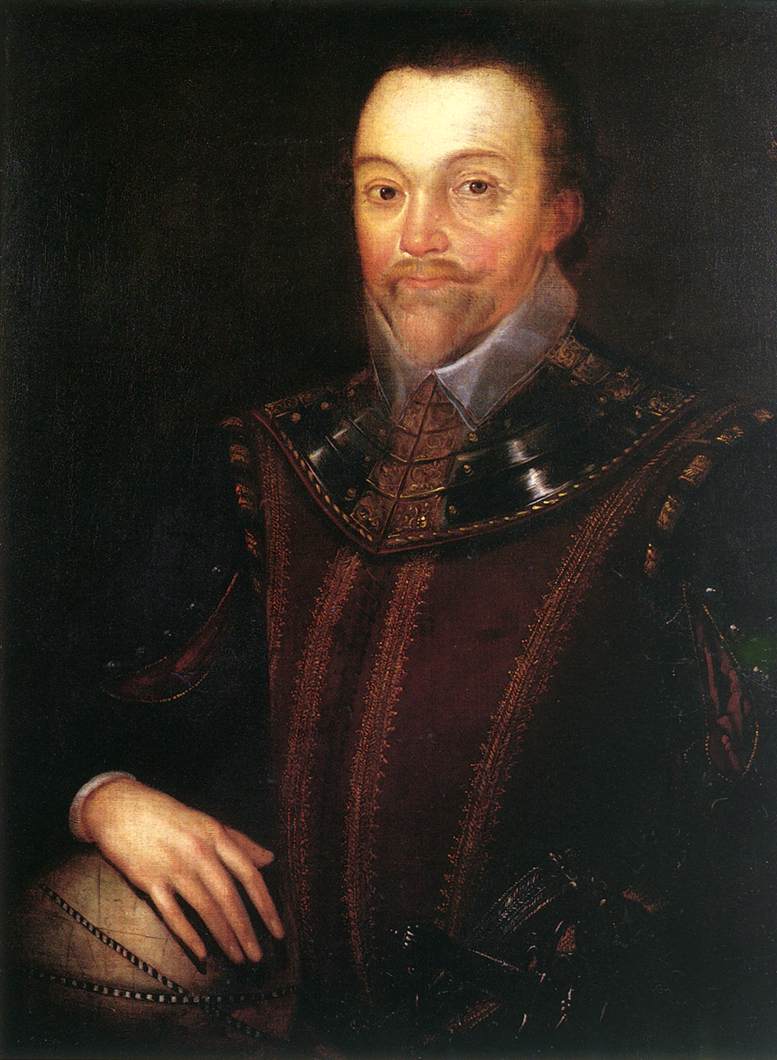
Sir Francis Drake
Drake had just returned, to great acclaim, for leading the daring and highly successful raid on Cadiz that year in which large numbers of Spanish ships destined to be involved in the attempted invasion of England were destroyed along with supplies and munitions and a treasure ship taken, just arrived from the South American colonies.

Raid on Cadiz


Along with Drake, Parker entertained the other greats of English seafaring history of that period, namely Drake's uncle Sir John Hawkins, Sir Richard Grenville, Sir Walter Raleigh and William Parker, brother of John Parker, a great captain in his own right and part of Drake's command that attacked Cadiz.

I knew Elizabethans were very short but surely not!

The fire place in the Great Hall bears the coat of arms of King James I and dates from 1640 with the figures of Peace and Plenty either side.

The fire-place in the Great Hall

The Parker family were great loyalists and supported King Charles I through the civil war that caused them to have their house confiscated by Parliament only to have it returned to them on the restoration of King Charles II.


It remained in the hands of the Parker family up until 1920, when, since then it has had many owners, including the National Trust.


Boringdon Hall was bought by the current owners in 2011 since when it has had a lot of investment to turn it into a premier hotel and spa.

All very cosy and inviting

It was a real pleasure using the spa and then dining that first evening in the Great Hall imagining the greats from history including Queen Elizabeth I who stayed at the Hall several times on her trips to the West Country.


The restoration of the building has been very considerate to the age and history of it with the additional bedrooms fitted out in the older medieval manor still retaining the arrow slits within each room now fitted with a glass window to add to the interior comforts.

The next morning after a traditional English breakfast with a superb black pudding, we were off up to Dartmoor to make a return visit to a site we had only seen in pictures and from a distance but on a bright sunny November morning were determined to walk up to and get a close look for ourselves.

Wistman Wood seen centre right in the West Dart Valley as we began our walk

Wistman Wood can be found close to Two Bridges nestling in the valley of the West River Dart and is an amazing example of the upland oak woodland that once covered much of the moor around 7,000 BC until it was cleared by Mesolithic hunter/gatherers about 5,000 BC and has been protected as a Sight of Special Scientific Interest since 1964.

Wistman Wood, Dartmoor
Legendary Dartmoor

The autumn hues of the wood became clearer the closer we got

The day we headed of along the path that follows the babbling Dart River, along its meandering course, saw the morning starting at a bracing 10'C with gloriously blue skies, which, as the sun rose, caused the temperature to rise and we were soon peeling of the layers.

The journey was accompanied by the gentle babbling of the Dart River 

As you get closer to the wood you immediately notice how stunted the oak trees are in comparison to their lowland cousins and yet these are not saplings by any means as their gnarled twisted appearance immediately displays their great age.

Stunted oak trees on the edge of the wood as we got even closer

The whole slope covered in trees was also covered in large boulders

The wood lies on the sloping ground of the valley and as you get close to the edge you can immediately see that the floor of it is covered in large moss covered limestone boulders that make traversing the area quite tricky whilst watching your footing and trying to avoid hitting your head on low lying branches.

I think Carolyn discovered the favourite rock of the Druids

I have never seen a wood quite like this and on entering it you can immediately appreciate the folklore and legend that has grown around its appearance, looking like something out of a 'Lord of the Rings' film set with the twisted trees covered in strange growths of mosses and lichen.


The trees were quite unlike any others I had seen before

One site even lays claim to this wood as a favourite sacred place for the local Druids and its not hard to imagine what they might have got up to here and you can't help thinking it might have been on the patrol route of the Roman garrisons, knowing how they felt about Druidism and, to the Romans, its strange sacrificial ceremonies.

Old gnarled trunks with twists and loops revealing very old trees

The mosses and lichens were equally as impressive as the rocks and trees they covered

On closer inspection the range and array of mosses and lichen are truly impressive with some very delicate examples amid the soft cushion of green, covering the rocks.


I had never seen anything like these hanging mosses on trees in the UK

Our picnic site beckoned from beyond the trees

On leaving the wood at the lower edge, Carolyn and I found a particularly sunny rock to sit on and grab a light picnic and drink whilst I settled down to read the second in the Anthony Riches series of Roman adventures on Hadrian's Wall in the company of the 1st Tungrians and Centurion Corvus in scenery that perfectly complimented the prose.

Wistman Wood is a remarkable place and now added to our list of favourite places on Dartmoor

After a very enjoyable late morning and early afternoon exploring Wistman Wood it was time to head off to Plymouth where we had arranged another hotel stay and time to visit Will our younger son who his studying medicine there.

With an evening meal arranged and a shopping expedition set for the following day before heading home we were really looking forward to a bit of sight seeing and time to meet Will and his flat mates.

With both our sons studying at Plymouth University we have got to know the city better with the many visits over recent years and the more you take the time to look the more you discover about the city's long and varied history.

On this occasion we were going to be staying close to the Hoe which for those who don't know Plymouth is the high open esplanade that faces out to sea and where it is supposed that Sir Francis Drake was enjoying his game of bowls when the Spanish Armada was sighted coming up the channel.

The Seas of Red display of ceramic poppies on Plymouth Hoe, remembering the losses of World War One

Will and his flat mates have rented student accommodation right next to the Hoe and you can see the attraction.

As well as offering glorious views out over Plymouth Sound, the Hoe is where the many memorials to Plymouth's connections with the services and the war memorials covering the Armada to the modern day are located.

At present, with the run up to Remembrance Sunday on the 11th November, there was a remarkable display of the ceramic poppies arranged in a wave shape alongside the War Memorial which Carolyn took pictures of on our walk to our restaurant that evening.

First shown filling the moat at the Tower of London in a display called Blood Swept Lands, these poppies have proven to be a popular and evocative way of illustrating the cost in human lives the World Wars imposed on the country and Commonwealth with this particular display, Seas of Red, illustrating the 7,300 British and Commonwealth casualties of the First World War who have no known grave and the seamen of the Royal Navy who sailed from Plymouth.

The Fab Four in Plymouth - 1967

The next morning after another sustaining full English breakfast we set off on a day of retail therapy, but not before exploring a few of the other sights on the Hoe.

I hadn't realised the 'Fab Four' had visited Plymouth, but the publicity picture above, taken in 1967 shows the Beatles out and about promoting their Magical Mystery Tour Album that year and the exact spot where they sat has been immortalised with a Beatles-Bum sculpture capturing the impressions of their "derrieres" and hand prints.

Beatle-Bums

And finally one particular memorial I was keen to find was as a postscript to a post I did last May as part of my series looking at the Battlefields of Devon and particularity the attack on Lydford in 997 AD; which saw the Viking invaders repulsed from the walls of the Saxon burgh and pursued back along the River Tamar by the Fyrd to Plymouth where they are thought to have set up a fortified camp at Torpoint and wintered under observation by the local Saxons.

Vikings in Plymouth 997 AD

Battlefields in Devon - Battle of Lydford

The stone erected on Plymouth Hoe was set up in 1997 for the thousandth anniversary of the campaign and is positioned with views out over Drakes Island, the Sound, Torpoint and the Cornish side of the River Tamar.


Home of the Royal Navy and gateway to the Channel and Western Approaches - Plymouth Sound with Drakes Island
I hope you enjoyed some of the flavour of Carolyn's Birthday on Tour 2017 and a nice way to start our series of posts for November.

Lots of stuff to tell you about on JJs coming up , including Mr Steve's potential book reviews, 28mm Viking Bondi and more Over the Hills play-tests.